

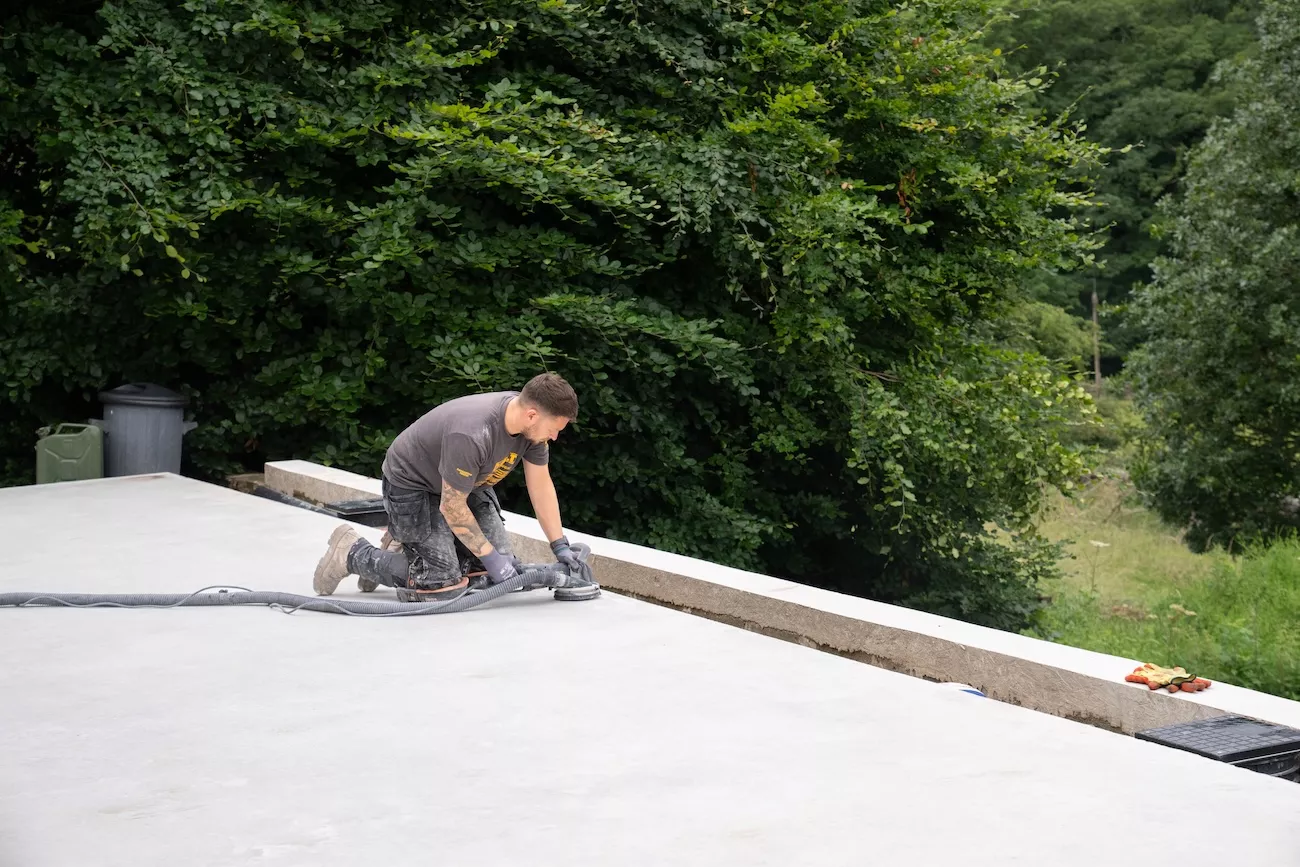
If you've started pricing up a polished concrete floor, you've probably already noticed the problem: ask three specialists for a quote and you can end up with three very different numbers. One installer says £110 per square metre. Another says £190. A third comes back at £260. No wonder it's hard to budget with any confidence.
The good news is that these numbers aren't random. Once you understand what actually drives the price of a polished concrete floor, the gap between a "cheap" quote and a premium one starts to make a lot more sense, and you'll be in a far stronger position to compare quotes properly rather than just picking the lowest figure.
This guide breaks down realistic UK pricing for both residential and commercial polished concrete floors in 2026, explains exactly what pushes cost up or down, and shows you how to get a quote you can actually trust.
As a rough guide, here's what you can expect to pay per square metre in the UK, depending on the scope of work and finish. Polishing an existing, sound concrete slab with a basic to mid-range finish typically costs between £45 and £100 per square metre, since there's no need for a new pour or curing time.
A new concrete slab, poured and polished to a standard residential finish, usually runs from £120 to £180 per square metre, reflecting the cost of supplying and laying the concrete before any grinding begins.
For a premium architectural or decorative finish, such as full aggregate exposure, a high-gloss surface or a custom colour, expect pricing from £180 up to £280 or more per square metre.
Commercial or industrial polishing across larger, more open areas tends to be more cost-effective, generally falling between £40 and £120 per square metre.
These figures are a starting point, not a fixed price list. The true cost of your floor will depend on your existing substrate, the finish you want, the size and shape of the space, and where in the UK you're based. We'd always recommend treating any online price guide, including this one, as a way to sense-check a quote rather than a substitute for a proper site survey.
Ready to see what your project would actually cost? Get a tailored quote from Refined, and we'll give you a clear, honest figure based on your space, not a generic average.
Every polished concrete quote is really the sum of several separate decisions. Here's what tends to have the biggest impact on price.
This is the single biggest factor in any quote. If you already have a sound, structurally stable concrete slab, concrete floor polishing is significantly cheaper because there's no need for reinforcement, damp-proofing, curing time or a new pour. A new polished concrete installation, on the other hand, involves supplying and laying the concrete itself before any grinding or polishing even begins, which is why new-build and extension projects sit at the higher end of the pricing scale.
If your existing floor has cracks, subsidence or moisture issues, repairs and preparation will add to the cost, but this is usually still more economical than demolishing and starting again.
Larger, open-plan spaces are generally cheaper per square metre than small, broken-up rooms. This comes down to efficiency: a specialist can work in long, continuous passes across a big open area, whereas a small kitchen with lots of corners, cabinetry and doorways requires more time-consuming edge work with hand-held equipment. Mobilising a crew and their machinery also carries a fairly fixed cost, so that cost is spread more thinly across a bigger floor.
The look of your floor has a direct effect on price:
Gloss level adds another layer of cost on top of this: a matte finish needs fewer polishing passes than a high-gloss, mirror-like surface.
A ground-floor extension with clear van access is straightforward to service. A third-floor flat with no lift, restricted parking, or working hours limited by a shared building is not. Projects in and around London and the South East also tend to sit at the higher end of national pricing, reflecting both labour costs and site logistics.
Polished concrete pairs beautifully with underfloor heating, as the thermal mass of the slab stores and releases warmth evenly. However, the heating system needs to be installed and pressure-tested before the concrete is poured, which adds to the overall project cost. Other extras worth budgeting for include coloured concrete or pigments, decorative saw-cut patterns, non-slip additives for wet areas, and movement joints for larger floors.
Removing old flooring, adhesive or coatings, filling cracks, and levelling uneven areas all need to happen before polishing can begin. Skipping proper preparation is one of the most common ways a "cheap" quote ends up costing more in the long run, so it's worth asking exactly what's included before you compare prices.
For homeowners, residential polished concrete has become one of the most sought-after finishes for contemporary kitchens, extensions and open-plan living spaces, and pricing varies depending on where in the home it's going.
These larger, more open areas tend to fall closer to the standard end of the residential pricing scale, particularly where the concrete is being poured as part of a new extension or renovation. Straightforward new installations with a satin or mid-gloss finish typically land in the £120 to £180 per square metre range, with premium architectural specifications running higher.
Smaller spaces such as bathrooms, utility rooms or hallways often cost more per square metre than larger rooms, which can catch homeowners by surprise. The reasons are the same ones covered above: more edging, more cutting in around fixtures, and the same mobilisation costs spread across a much smaller area. If you're polishing a small space, it's worth asking your installer whether combining it with another project (such as an adjoining kitchen floor) could improve the overall value.
Commercial polished concrete flooring has long been a favourite for commercial and industrial spaces thanks to its durability, low maintenance and clean, professional appearance, and the economics here work slightly differently from residential projects.
These environments often call for a higher-specification finish, since the floor is doing double duty as both a functional surface and part of the brand experience. Expect pricing broadly in line with premium residential work, particularly where a bespoke colour, pattern or high-gloss finish is specified.
Large, open industrial floors benefit the most from economies of scale. Polishing an existing slab across a warehouse or factory floor can be considerably more cost-effective per square metre than a smaller residential project, since there's minimal edge work and the crew can work efficiently across long, uninterrupted runs. This makes polished concrete one of the more cost-effective flooring solutions available for large commercial footprints.
Polished concrete often looks more expensive on paper than tiles, resin or traditional screed-and-covering setups, but the comparison changes once you factor in lifespan and maintenance.
If you're planning to stay in your property, or keep your commercial unit, for more than five years, polished concrete's total cost of ownership is usually lower than the cheaper-looking alternatives once you account for replacement and upkeep.
Price guides like this one are useful for building a realistic budget, but no online guide can replace a proper site assessment. Before requesting a quote, it's worth gathering:
A reputable specialist should want to inspect your site, or at least review detailed information about it, before confirming a fixed price. A proper written quote should clearly itemise what's included (preparation, densifier, sealant, and so on) and what isn't, so you're comparing like with like rather than guessing at the small print.
Prices typically range from around £45 per square metre for polishing an existing slab with a basic finish, up to £280 or more per square metre for a new slab with a premium architectural finish. Most standard residential projects fall somewhere between £120 and £200 per square metre.
Not usually on the initial quote, but polished concrete tends to work out more cost-effective over time thanks to its long lifespan and low maintenance requirements.
Yes. Concrete's thermal mass makes it particularly well suited to underfloor heating, as it stores warmth and releases it evenly across the floor.
With proper installation and basic care, a polished concrete floor can easily last 20 years or more, often outlasting several cycles of alternative flooring.
In many cases, yes, provided the existing slab is structurally sound and free of significant damage. This is usually the more affordable route, as it avoids the cost of a new pour and curing time.
Every polished concrete floor is different, and the only way to know exactly what yours will cost is with a proper assessment of your space. At Refined, we take the time to understand your project, whether it's a high-end residential renovation or a commercial installation, and provide a clear, transparent quote with no hidden extras.
Get in touch with our team today for a free, no-obligation quote and honest advice on the right specification for your space.

Thinking about upgrading your business floor? See why commercial polished concrete is the durable, low-maintenance choice more UK businesses are switching to, and get a free quote from Refined's North West team.