

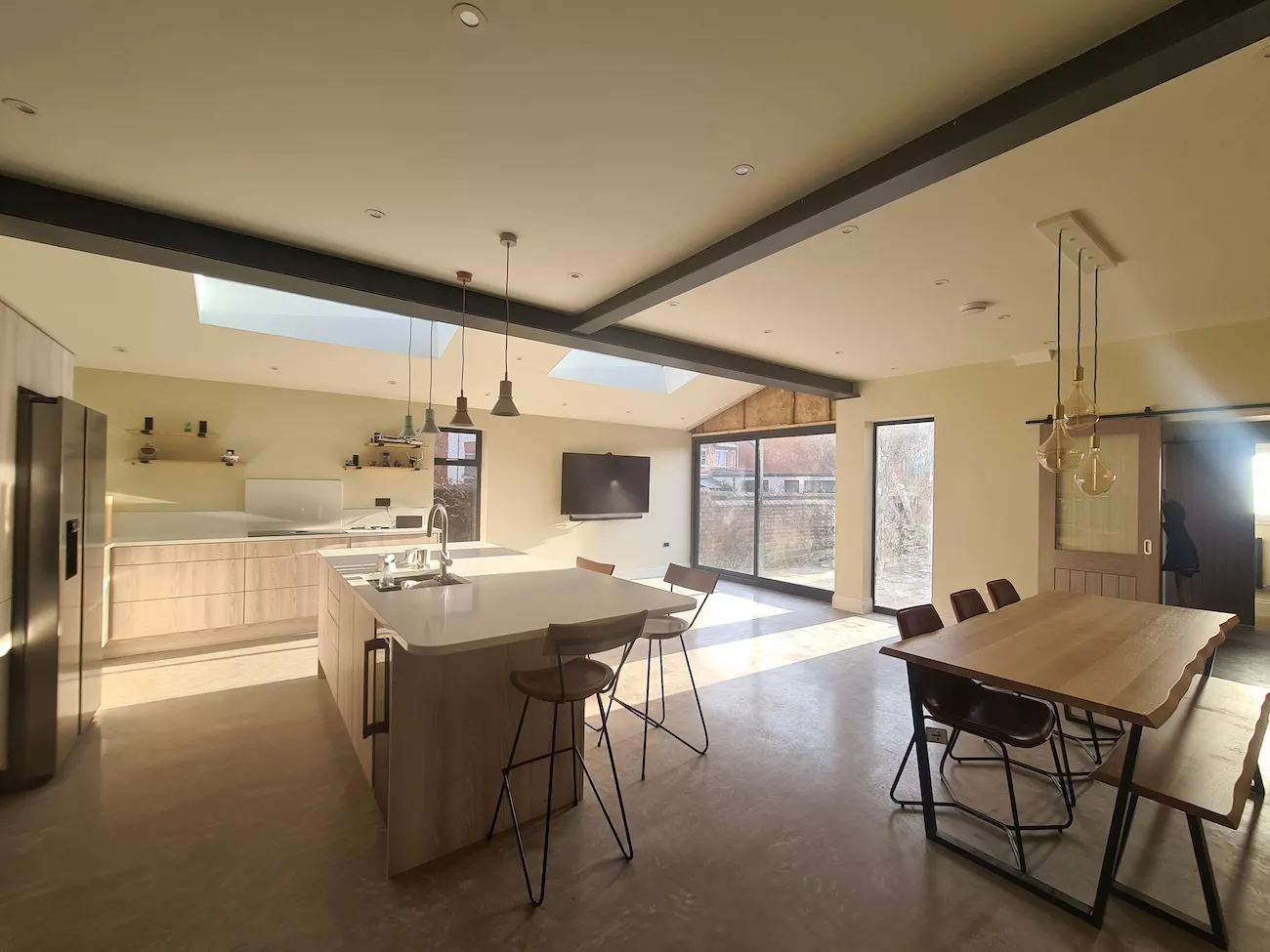
A kitchen floor takes more punishment than almost any other surface in the house: dropped pans, spilt oil, dragged chairs, muddy boots, and years of foot traffic before anyone even thinks about replacing it. Polished concrete has become one of the most requested kitchen floors we install at Refined, precisely because it’s built to shrug off exactly that kind of daily wear.
This guide goes beyond the usual “it’s durable and low maintenance” line. We’ll cover the actual hardness and lifespan you can expect, how the day-to-day maintenance really compares to tile and wood, what installation involves, and what it costs, so you can decide with real numbers rather than guesswork.
Durability is the main reason homeowners choose polished concrete for a kitchen, so it’s worth being specific about what that actually means.
The trade-off: hairline shrinkage cracks can appear over time as the slab settles. These are cosmetic, don’t affect structural integrity, and are far less common when the floor is installed and cured correctly, which is why the quality of the installer matters more with concrete than with almost any other flooring type.
“Low maintenance” gets used loosely in flooring marketing, so here’s how the day-to-day and long-term upkeep actually stacks up.
Polished concrete - Daily upkeep is a sweep and a damp mop with a pH-neutral cleaner, nothing more. There are no grout lines or seams to maintain, and a sealed surface resists staining as long as spills are wiped up promptly. The floor needs resealing roughly every 3–5 years depending on foot traffic, and if it’s ever damaged, a localised patch and re-polish usually sorts it. Expect 20+ years before any major work is needed.
Ceramic or porcelain tile - Daily cleaning is straightforward, but the grout lines are the weak point: they need resealing every 1–2 years to stop them staining, and if you skip it, spills soak straight in. Grout is also where bacteria and grime tend to build up first in a kitchen. If a tile cracks, replacing it individually carries a colour-match risk, since batches vary over time. Grout failure is usually what forces a full refit after 15–20 years, well before the tiles themselves wear out.
Engineered wood - This is the most maintenance-sensitive option in a kitchen. It should only ever be dry-mopped or cleaned with a barely damp mop; standing water (a dropped ice cube under the fridge, a slow leak) can cause warping within hours. It needs sanding and refinishing every 7–10 years, and typically needs full replacement after 10–15 years, the shortest lifespan of the four.
Vinyl - Cleaning is easy: sweep and mop, but sheet vinyl seams can lift over time, especially near sinks and dishwashers where moisture gets underneath. It isn’t refinishable, so once it’s worn or damaged, the only fix is patching a section or replacing it outright. Typical lifespan before replacement is 5–10 years.
The pattern that matters most for kitchens specifically: concrete and tile both handle water well, but tile’s grout lines are the weak point; they stain, they harbour bacteria, and they need their own maintenance routine. Wood looks warmest but is the most vulnerable to the exact conditions a kitchen guarantees (spills, steam, dropped ice cubes under the fridge nobody notices for a week).
Polished concrete adapts to more kitchen styles than people expect:
For an average UK kitchen, installation typically takes 3–5 days including cure time, though this varies with slab condition and finish complexity. If you’re working with an existing slab that’s in poor condition, a polished concrete overlay is usually the faster, lower-disruption route.
Costs vary by slab condition, finish, and aggregate exposure, but as a general guide, polished concrete sits above vinyl and mid-range laminate, and is broadly comparable to good-quality porcelain tile once you account for tile’s grout and installation labour. Given it typically outlasts both by 5–10 years without major refinishing, the cost-per-year over the life of the floor is usually lower than the upfront price suggests. Get a tailored quote based on your kitchen’s dimensions and finish.
If you want a floor that will outlast a kitchen renovation cycle, shrug off daily spills without a grout line in sight, and adapt to almost any design style from industrial to Scandinavian, polished concrete is one of the strongest cases in flooring. Get in touch with Refined for a quote based on your kitchen’s exact layout and finish.

Thinking about upgrading your business floor? See why commercial polished concrete is the durable, low-maintenance choice more UK businesses are switching to, and get a free quote from Refined's North West team.
Get a quote

©Copyright Refined. All rights reserved.