

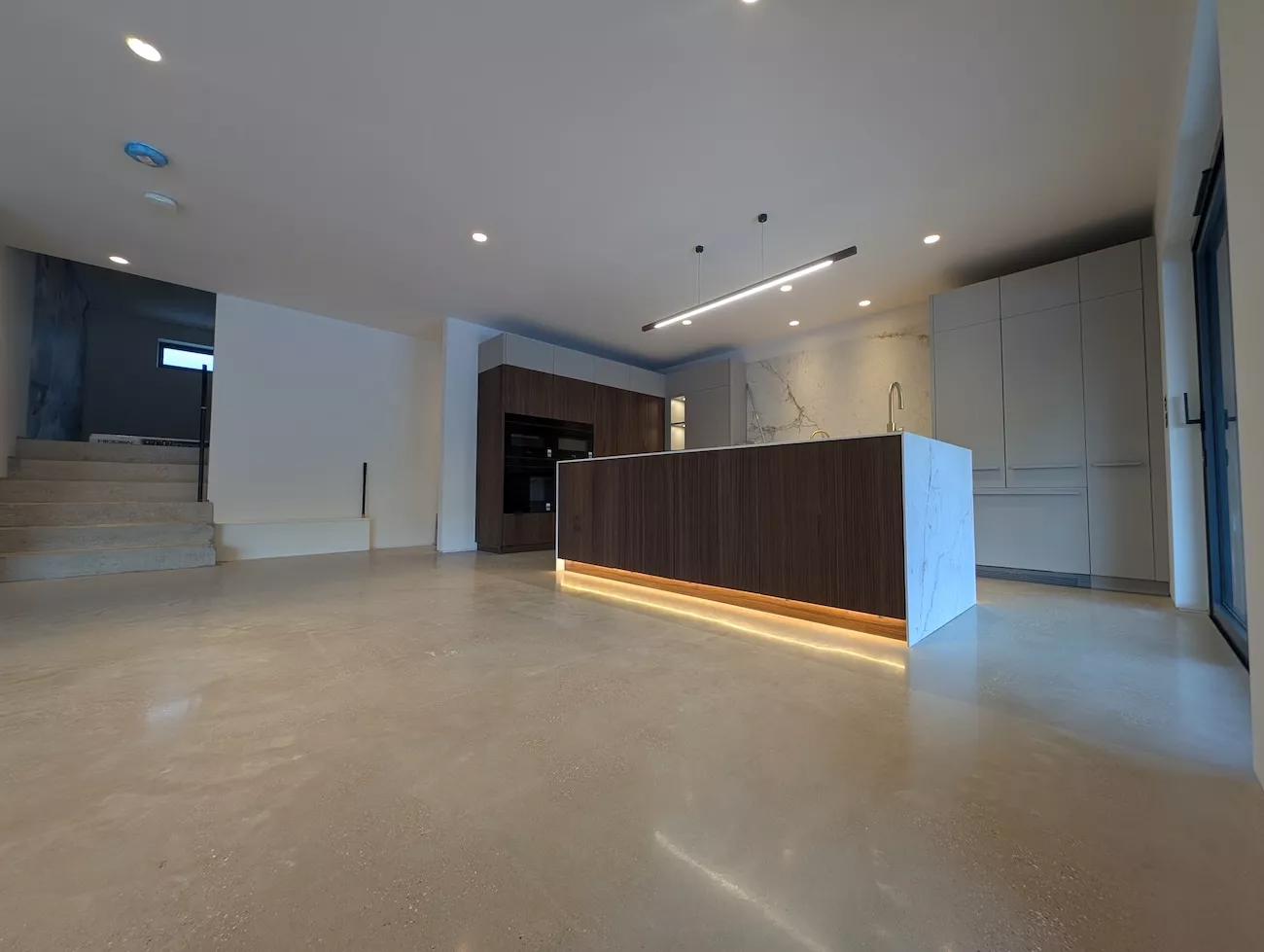
Polished concrete has moved a long way from its warehouse and showroom origins. Where it was once chosen purely for durability in commercial settings, it's now one of the most requested flooring options for UK homes, extensions and new builds. Homeowners like it for the same reasons architects do: it's seamless, low maintenance, and it suits almost any interior style from minimalist to industrial.
Polishing an existing slab typically costs between £45 and £100 per square metre, while a new poured and polished floor tends to run from £120 to £150 per square metre, depending on finish and preparation. Below, we cover the benefits, the design options, where it works best room by room, and what actually drives the price, so you can weigh it up properly before getting quotes. If you'd like the full picture of what we offer across residential projects, our residential polished concrete floors page is a good place to start.
A polished concrete floor isn't a covering laid on top of your existing floor; it's the slab itself, refined into the finished surface. That's a meaningful difference from tile, timber or vinyl: there's no separate material to wear through, lift, or replace.
The process happens in stages:
The existing slab is assessed for cracks, unevenness and any contamination from oil, adhesive or old flooring. Repairs and levelling happen here, before any grinding starts. Skipping or rushing this stage is the single biggest cause of a disappointing finish, so it's worth asking any contractor how they handle prep, not just how they polish.
Diamond-segmented grinding tools work through progressively finer grits, typically starting around 30 to 50 grit and stepping up through several stages to 800 grit or finer for a high-gloss finish. This is what exposes the aggregate (if that's the look you want) and removes the surface imperfections that would otherwise show through the final polish. This is the core of what we do at concrete floor polishing, whether that's a full new installation or restoring an existing surface.
Finer resin-bonded pads continue the process, gradually building the sheen level. A matte finish stops earlier in this sequence; a high-gloss finish continues through the full range of grits.
A chemical densifier is applied to harden the surface and close its pores, followed by a sealer that improves stain and moisture resistance. This stage is what makes the floor practical for daily family life, not just good-looking on installation day.
A new pour needs a minimum curing period, usually around 28 days, before polishing can begin, which is worth building into your project timeline if you're planning around a new build or extension.
Polished concrete resists scratches, impact and heavy foot traffic far better than timber or laminate. Properly installed and maintained, it can last several decades without needing replacement, which makes the higher upfront cost easier to justify over the lifetime of the floor. It's a genuinely practical choice for households with children, pets, or simply a busy hallway.
Concrete has excellent thermal mass, meaning it absorbs and releases heat efficiently. Paired with underfloor heating, this can mean a more evenly warm room and lower running costs over time compared with floor coverings that insulate against the heat rather than conducting it.
Day to day, that means sweeping or vacuuming and an occasional damp mop with a pH-neutral cleaner. There are no grout lines to scrub and nothing to wax. The one thing to plan for is periodic resealing, typically every few years depending on foot traffic, which takes a few hours and keeps the stain resistance topped up.
Because polished concrete uses the slab that's already there, it avoids the material waste that comes with laying a new floor covering on top. Combined with its long lifespan, that makes it one of the lower lifecycle-impact flooring options available for a renovation or new build.
This is where polished concrete earns its reputation as a design feature rather than just a practical surface. The finish you choose changes the entire character of a room.
A matte finish gives a soft, understated look that suits rustic or Scandinavian interiors and hides everyday marks well. Satin sits in the middle, offering a subtle sheen without the full reflectivity of gloss. A high-gloss finish is the most striking option, bouncing light around a room and working particularly well in open-plan spaces where natural light is at a premium.
Grinding deeper into the slab exposes more of the natural aggregate, giving a speckled, textured look that's popular in industrial-style interiors. Alternatively, a lighter grind with pigmented dye can produce a smooth, uniform colour, from soft greys through to warmer tones that pair well with timber and natural stone.
Industrial and loft-style interiors tend to suit a darker, exposed-aggregate floor with a lower sheen. Scandinavian and contemporary interiors often work best with a lighter, more uniform colour and a higher gloss to maximise light reflection. There's no single right answer here; it comes down to the rest of your material palette, so it's worth discussing sample finishes alongside your worktops, cabinetry or flooring transitions before committing.
Kitchens are one of the most popular applications, and for good reason: a seamless, hygienic surface that handles spills and heavy footfall without complaint. In open-plan layouts, polished concrete also helps tie kitchen, dining and living zones together visually, without the need for transition strips between different flooring types. We've covered this in more depth in our guide to polished concrete kitchen floors and our benefits and cost guide for kitchen installations, both worth a read if the kitchen is your starting point.
Polished concrete is particularly effective where an extension or garden room connects to the outdoors through bifold or sliding doors, since it can run seamlessly from inside to out at floor level. See our dedicated guide on concrete garden floors for more on this application specifically.
Hallways take more daily wear than almost any other space in the home, and polished concrete's resistance to scuffs and scratches makes it a sensible choice here, particularly if you have a busy household with pets or young children tracking through regularly.
For garages and utility rooms, polished concrete offers a durable, easy-to-clean surface that handles oil, grit and heavier loads without the concerns that come with softer flooring. It's a practical upgrade for anyone converting a garage into usable living or workshop space.
Polished concrete can work well in bathrooms, but slip resistance needs proper consideration. A honed or lower-sheen finish, or a specified slip-resistant sealer, reduces the risk that comes with a smooth surface in a wet room. This is a case where it's worth being upfront with your installer about the finish you want versus the practicalities of a wet environment, rather than choosing purely on looks.
Pricing depends on your starting point. Polishing an existing, sound slab typically costs between £45 and £100 per square metre, since there's no need for a new pour or curing period. A new floor, poured, finished and sealed, tends to cost more, generally in the region of £120 to £150 per square metre, reflecting the additional material, labour and time involved.
The main factors that move the price within these ranges are the condition of the existing slab (repairs and levelling add cost), the complexity of the finish (a simple grey matte costs less than a bespoke pigmented, high-gloss finish), and site access. For a full breakdown of what drives cost up or down, and how to compare quotes properly, see our UK polished concrete floor cost guide.
If you're renovating and already have a sound concrete slab, polishing it is usually the more cost-effective route, and it's the core of what we offer through our [concrete floor polishing] service. If you're working with a new build or an extension, you have the choice to specify the concrete mix and finish from the outset, which can open up more design options but comes with the added time of the curing period.
There's also a middle ground worth knowing about: if your existing subfloor isn't suitable for direct polishing, our [polished concrete overlay systems] apply a thin, durable overlay that achieves the same seamless polished look without the disruption of a full new pour. We've written a full comparison in polished concrete overlay vs new concrete, covering cost, installation time and finish consistency in more detail.
Honesty matters here as much as enthusiasm. Concrete is firmer underfoot than timber or carpet, which some people don't mind and others prefer to soften with rugs or underfloor heating. It's also a harder, more reflective surface acoustically, so open-plan spaces can carry more sound than a carpeted room would, something worth factoring into your wider interior design rather than discovering it afterwards. Finally, results depend heavily on installer experience: a rushed preparation stage or an inexperienced polishing team is the most common cause of an uneven or disappointing finish, so it's worth asking to see previous residential projects before committing.
Concrete can feel cool to the touch compared with carpet or timber, but this is easily addressed with underfloor heating, which concrete conducts particularly well, or with rugs in areas where you want extra warmth.
Yes. Concrete's thermal mass makes it one of the best-performing floor types for underfloor heating, absorbing and releasing heat evenly across the room.
With proper installation and periodic resealing, a polished concrete floor can last several decades, often outlasting the fitted lifespan of timber, carpet or vinyl alternatives.
If the existing slab is sound, structurally stable and free of significant damage, it can usually be ground and polished directly through our [concrete floor polishing] service, which is more cost-effective than a new pour. Where the subfloor isn't suitable, our polished concrete overlay systems offer an alternative route to the same finish. A survey by your installer will confirm which option suits your project.
Whether you're renovating a kitchen, extending into the garden, or planning a new build from the ground up, our team can talk you through the right finish, cost and timeline for your project. Get in touch with Refined for a free, no-obligation quote, or explore our full range of residential polished concrete floors and polished concrete floor services to see everything we install.

Thinking about upgrading your business floor? See why commercial polished concrete is the durable, low-maintenance choice more UK businesses are switching to, and get a free quote from Refined's North West team.